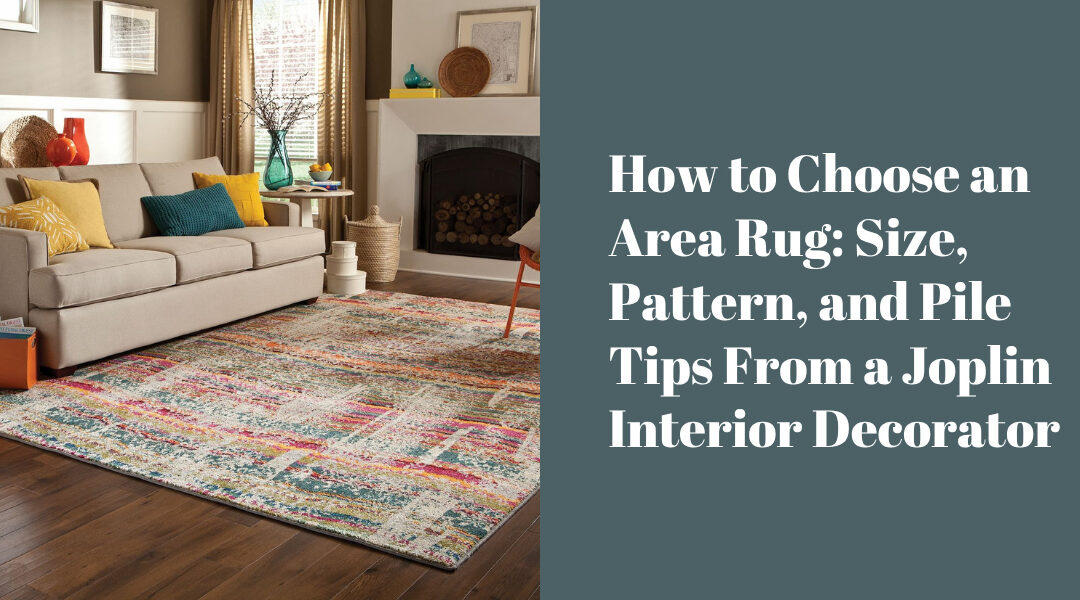
A rug can make or break a room, and that’s not an exaggeration. The right one pulls a seating arrangement together, adds warmth underfoot, defines a space within a larger open floor plan, and contributes color, texture, and pattern in a way that’s surprisingly hard to replicate with anything else. The wrong one makes a room feel small, disconnected, or just slightly off in a way that’s difficult to put your finger on.
It’s also one of the most common places people second-guess themselves. Size alone trips up a lot of homeowners, and that’s before factoring in pile height, pattern scale, and how the whole thing will hold up to real life. Here’s how we think through it.
Size Is Where Most People Go Wrong
Undersized rugs are one of the most frequent missteps we see in otherwise well-put-together rooms. The impulse makes sense — a smaller rug feels like a safer, less expensive commitment — but the result is a floating island of pattern that makes the furniture around it look untethered.
In a living room, the rug should be large enough that the front legs of every major seating piece can rest on it comfortably. This connects the furniture into a cohesive grouping and gives the room a sense of intention. A rug where only the coffee table sits on it and everything else floats around it tends to shrink the perceived size of the room rather than expanding it.
In a dining room, the rule of thumb is simpler: the rug should be large enough that all chair legs remain on it even when chairs are pulled out. Nothing disrupts a dinner party quite like a chair leg catching on a rug edge every time someone stands up.
If you’re not sure what size you need before committing, painter’s tape on the floor is a surprisingly effective way to visualize the footprint. It takes ten minutes and saves a lot of returns.
Pattern: Statement or Support?
The role you want the rug to play in the room determines how much pattern it should carry. A rug in a room that’s already working hard with patterned upholstery and textured wallcovering might be better served by something quieter, a tone-on-tone weave or a subtle geometric that adds visual interest without competing. A rug in a room of mostly solids and neutrals can afford to be the thing that brings the energy.
Scale matters here just as much as it does with fabric. A large-scale pattern on a rug in a small room can feel overwhelming, while a small, busy pattern in a large room tends to disappear. Medium-scale patterns with good contrast tend to be the most versatile across room sizes, but the best choice always depends on what else is happening in the space.
One approach we particularly like is using the rug as the starting point for the room’s color story. Brands like Jaipur, Company C, and Amer Rugs offer beautiful options with sophisticated palettes that make it easy to pull fabric and accessory colors directly from what’s already in the rug. It’s one of the most reliable ways to build a room that feels cohesive rather than assembled.
Pile Height and Material: Beauty Meets Real Life
Pile height affects both how a rug looks and how it performs. High-pile and shag rugs bring a sense of luxury and warmth that works beautifully in bedrooms and low-traffic living spaces. They’re soft underfoot and visually lush, but they require more maintenance and can be difficult to keep clean in busy households. Low-pile and flatweave rugs are easier to maintain, show furniture indentations less, and tend to work better under dining tables where chair movement is constant.
Material is equally important. Wool is the gold standard for durability, softness, and natural stain resistance, and it holds color beautifully over time. Natural fiber rugs in jute or sisal bring an organic texture that layers well with other materials and suits a more relaxed, earthy aesthetic. Synthetic options have improved considerably and offer strong performance for high-traffic areas or homes with pets and children, often at a more accessible price point.
The honest answer is that there’s no universally right material, only the right material for your room, your household, and how you actually live in your home.
Don’t Forget the Pad
A quality rug pad is one of those things that seems like an afterthought until you skip it. Beyond keeping the rug from sliding, a good pad extends the life of the rug significantly by reducing the friction and wear that comes from foot traffic. It also adds a layer of cushion underfoot that makes even a lower-pile rug feel more comfortable. It’s a small investment relative to the rug itself and absolutely worth making.
Finding the Right Fit
Choosing a rug involves more variables than most people expect going in, and getting it wrong is an expensive lesson. If you’ve been staring at your living room floor wondering what’s missing, or if you’ve bought a rug that just didn’t work and you’re not sure why, come talk to us.
The showroom at 2027 Roosevelt Ave carries rugs from Jaipur, Company C, Amer Rugs, Masland, and more, and Margie and Kim can help you find the size, pattern, and material that works for your specific space. Reach out to schedule a consultation or stop by and see what’s in store. The right rug is out there, and it makes more difference than you might expect.